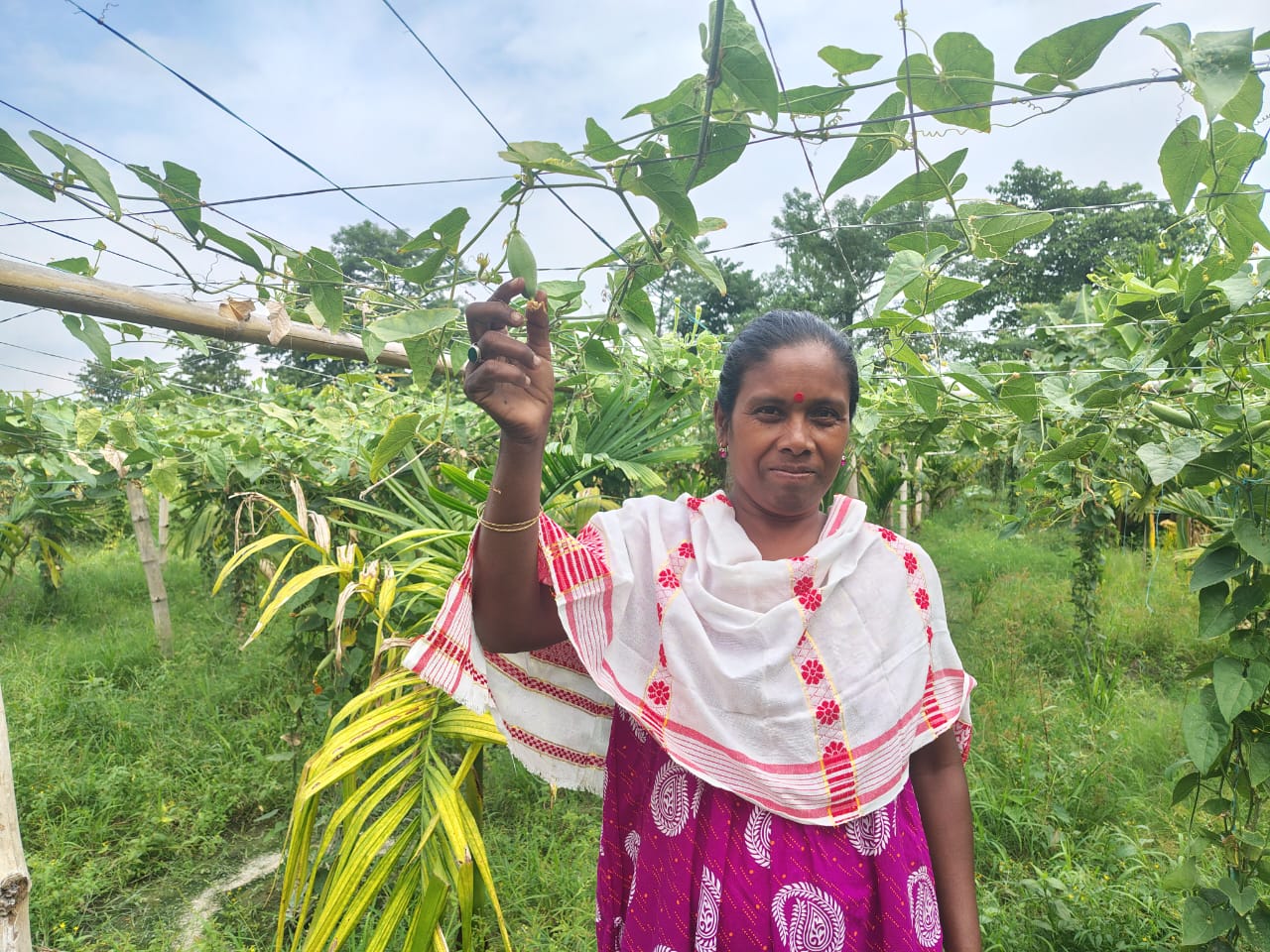
Pramila Urang, a determined farmer and active member of the Nirmali Self-Help Group (SHG) in Tetliguri village, Dhamdhama block, Bodoland, is redefining what smart, sustainable farming looks like. Backed by the MGNREGA plantation scheme, she received ₹1.1 lakh to plant 350 arecanut saplings across 3.5 bighas of land—an investment that typically takes years to show returns.
But Pramila wasn’t willing to wait.
To generate early income, she turned to intercropping—cultivating banana trees and bottle gourd across 2 bighas. With just ₹1,500 spent on land preparation and materials, she created an impressive model of low-cost, high-impact farming. Her bottle gourd harvest has already yielded 18 quintals, sold at ₹25 per kg, bringing in ₹45,000—a substantial boost for her household.
The banana trees are now fruiting, promising another stream of income in the months ahead. She has also planted Assam lemon saplings along the border of her farm, ensuring continued productivity and long-term sustainability. Going forward, Pramila plans to expand her intercropping with more seasonal vegetables.
Beyond income, her integrated approach enriches her family’s nutrition with fresh produce. Her success is motivating women in her SHG and across the community to embrace diversified, climate-smart farming practices.
Pramila’s journey shows what’s possible when government support, SHG resilience, and farmer-led innovation come together. She stands as a shining example of how rural families can build sustainable livelihoods—one smart decision at a time.
Contributed by: Popi Baruah, Program Associate – DWIMU, Kokrajhar, Bodoland, Assam