The Fish Culture: A Pond of Possibilities
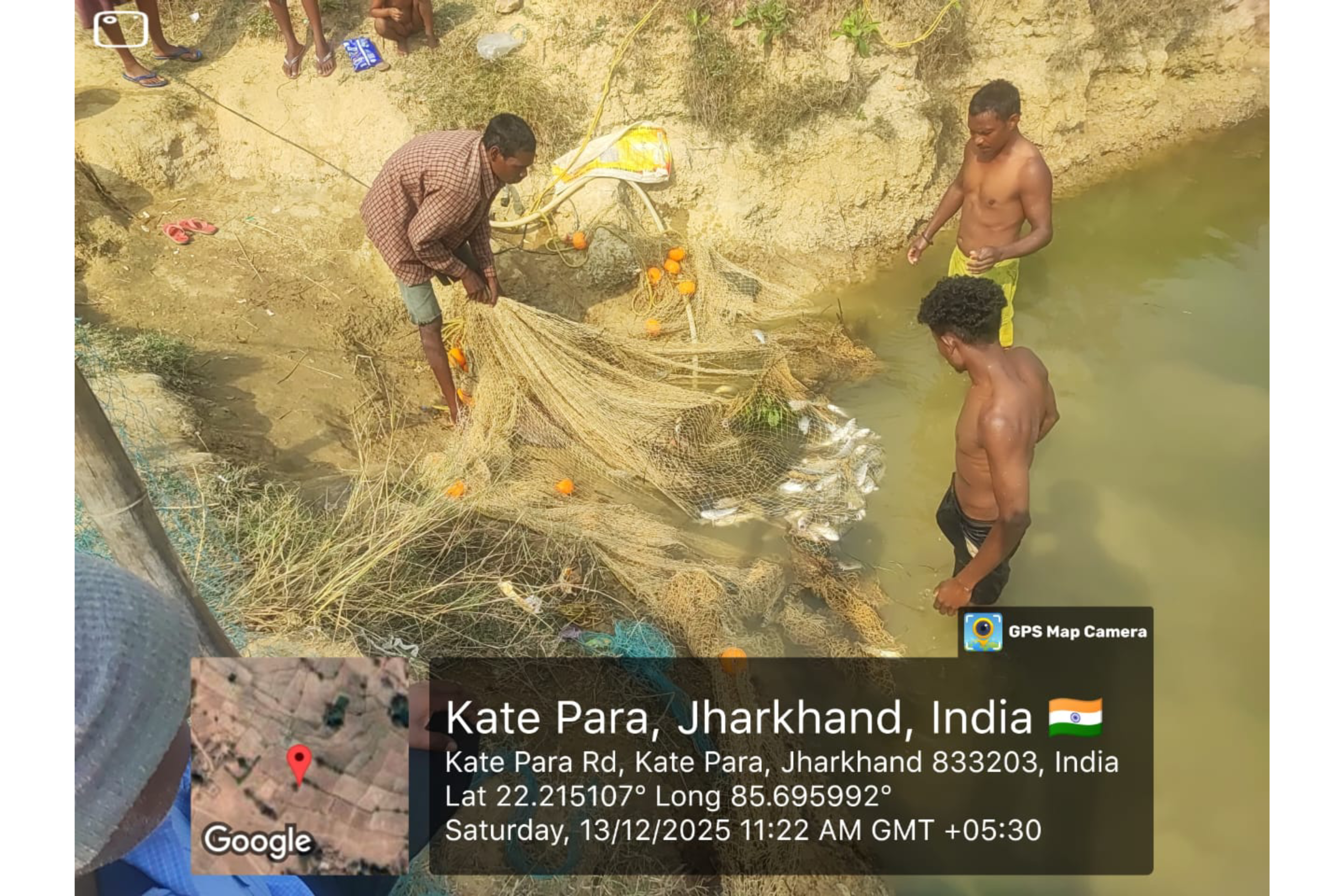
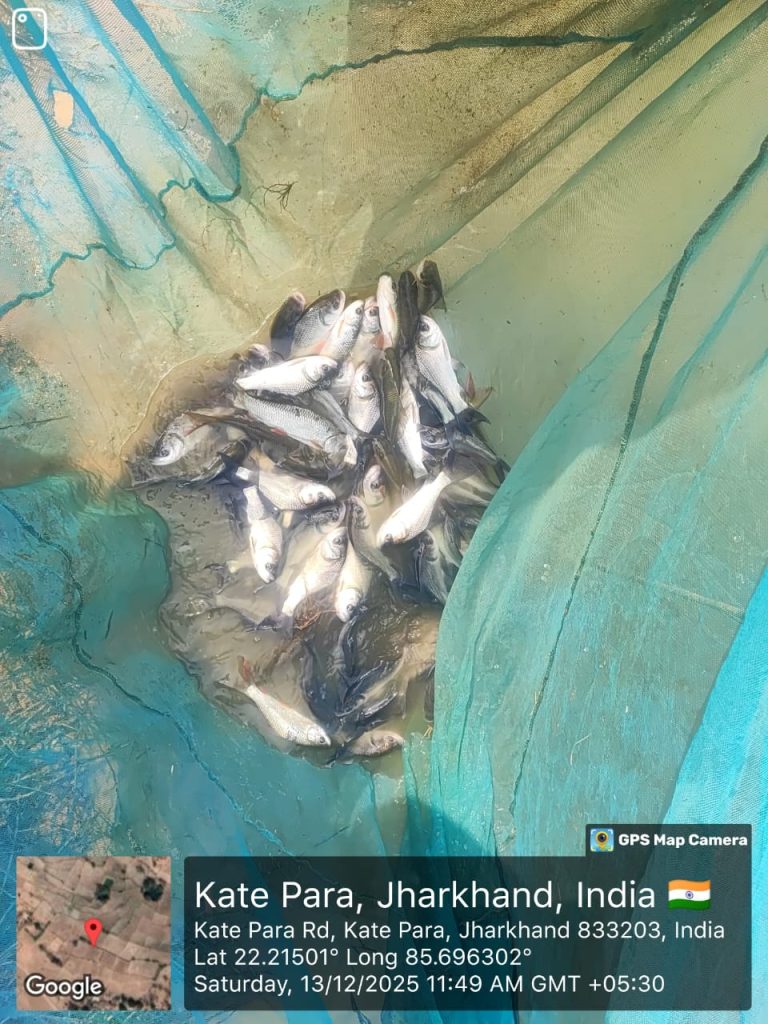
In Katepara village of Karanjia Gram Panchayat, nestled in the Jagannath block of West Singhbhum, lives Subhash Chandra Sinku—a progressive farmer known for his quick adoption of innovative and sustainable agricultural practices. His transformation began during the E-PRA planning process of the Jiwi Daah Hasa initiative under the Jharkhand High Impact Mega Watershed Project. Here, Subhash voiced his interest in developing a farm pond to strengthen his livelihood. Responding to his vision, a pond measuring 120 ft x 100 ft x 10 ft was constructed in 2023 in collaboration with the Tata Steel Foundation.
What followed is an inspiring example of integrated farming at its best. Subhash started with pisciculture, but he didn’t stop there. He maximised every inch of the pond ecosystem—cultivating vegetables along the bunds, planting Arhar on the inner slopes, installing trellises, introducing duck rearing, and creating a compost pit—all grounded in natural farming practices. Before stocking fish, he equipped himself with the necessary skills by completing a five-day pond-rearing training under the Department of Fisheries.
In March, ahead of the monsoon, he stocked around 20 kg of fingerlings. Seven months later, he harvested his first lot—15 kg of table fish, which he sold at ₹240 per kg, earning ₹3,600. While this was just the beginning of his pisciculture returns, the real value lies in the layered system he has created around the pond.
This season, Subhash has cultivated tomato, cabbage, pea, cauliflower, and chilli using natural farming methods. With healthy crop growth and rising market demand, he anticipates strong earnings. Before the intervention of the SUPPORT (CSO Partner) team under the Jiwi Daah Hasa project, Subhash relied solely on fishing. Today, his pond has evolved into a fully integrated system—optimising water, space, and biological resources for continuous income.
His integrated model brings together multiple livelihood activities:
Pisciculture
Vegetable cultivation along the bund
Trellis (Machaan) for creepers
Duck rearing
Arhar (Pigeon Pea) on the inner slope
By interlinking these components, Subhash has significantly reduced cultivation costs, minimised risks, improved soil health, and unlocked year-round income opportunities. His journey stands as a powerful testament to how innovation, guidance, and determination can turn a simple farm pond into a sustainable engine of prosperity.
Contributed by: Dangi Hembrom, Project Coordinator, SPMU- Jharkhand