“Pesticide is like a paracetamol. Its effect on the crops ends after an hour.” says a Maharashtra farmer who shifted to natural farming.
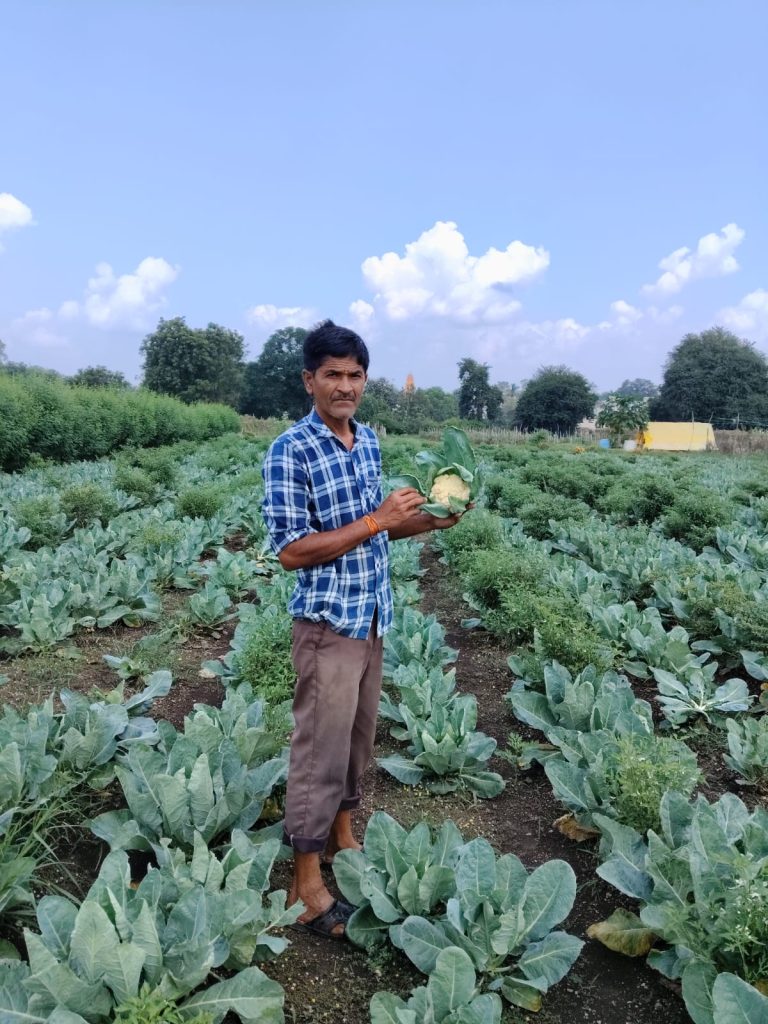
A veteran farmer, Laxmikant Vishnu Munde, living in Bodhadi Khurd village in Kinwat block of Nanded district in Maharashtra, owns 4-acre land and is one of the few farmers in the village who cultivate high value crops like cauliflower, tomato, chilli, etc. for commercial production and has spent nearly ₹1 crore on pesticides and chemical fertilisers in the past 3 decades. He says, “Pesticide is like paracetamol. Its effect on the crops ends after an hour.”
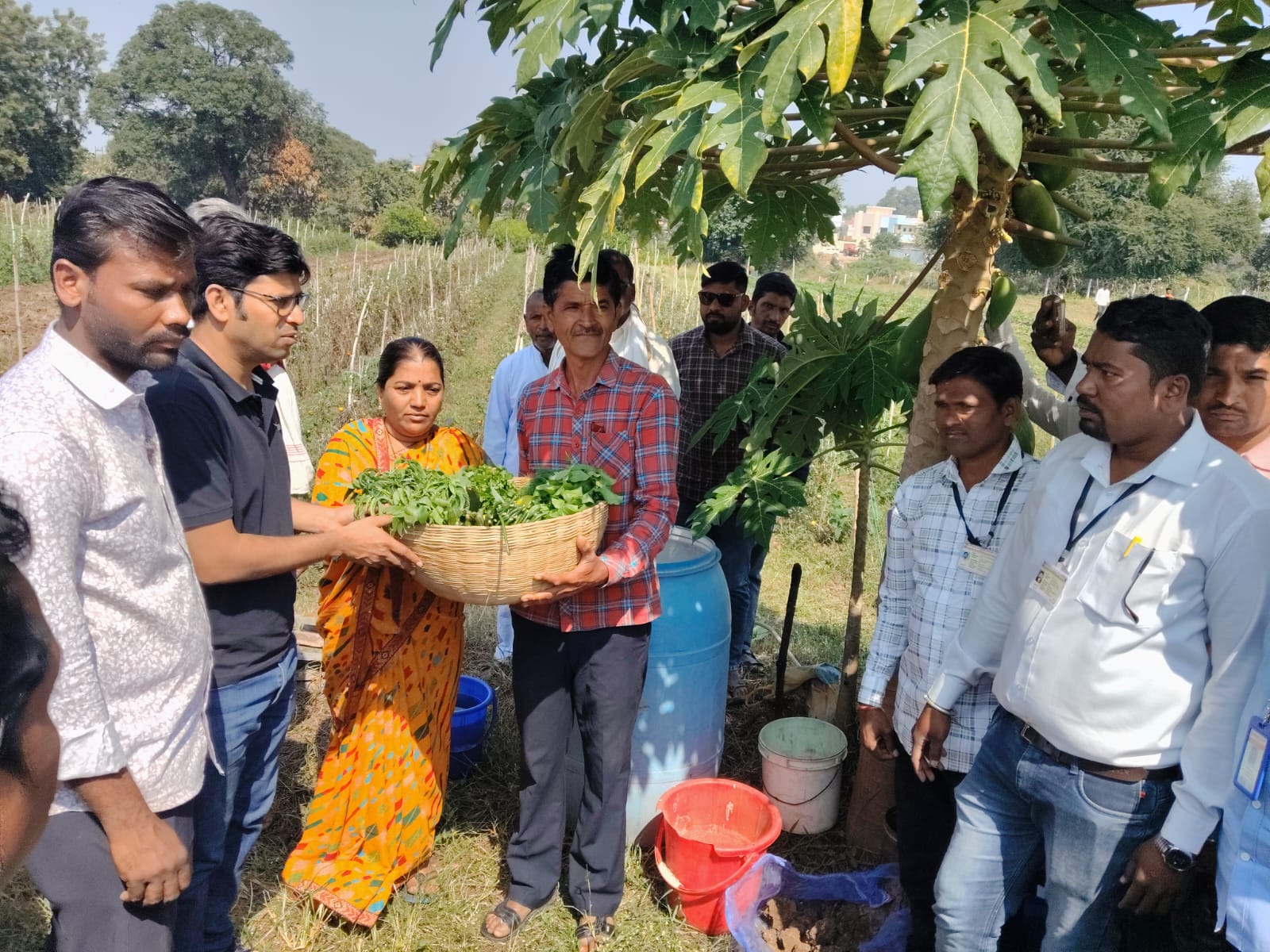
When the field staff of Rashtravikas Agro Education Sanstha started working in Bodhadi Khurd, they informed Laxmikant about the effects of chemical farming, which strengthened his views and he was instantly ready to adopt alternatives. It was then that the community resource person introduced him to “Jeevamrit” – a liquid manure that boosts microbial life in soil, leading to enhanced soil fertility and plant growth. It is made up of a 200L drum, chickpea powder and jaggery. Laxmikant owns a cow, so there was ample supply of cow dung and cow urine. He prepared around 6000 litres of Jeevamrit in the whole season and used it on 1.5 acre land on different vegetable crops.
There was visible transformation in the quality of cauliflower and chilli, which otherwise are hugely prone to pest attacks and essentially require pesticide spray multiple times. On the cauliflower field, the CSO staff also helped him install sticky traps and bird perches for pest control. The use of Jeevamrit through soil-drenching application method every 10-15 days and pest control with sticky traps showed unexpected results on Laxmikant’s cauliflower field. He explains that out of the 3500 cauliflower plants that he had planted on 30 decimal (12 gunthe) land, he had expected around 500 plants to be destroyed due to pest attack. To his surprise, only 10-15 plants were destroyed and the size of the cauliflowers were much bigger than usual.
He took a huge leap from selling cauliflowers worth ₹30,000 to 35,000 usually each year to selling cauliflowers worth ₹85,000 in this season. Not only were his cauliflowers better in quality and sold for a good price, but his dependency on pesticides also reduced drastically. He delightfully mentions, “The result of Jeevamrit was so convincing that I did not have to use any pesticide on my cauliflower field this season.”
One of the key factors that has helped steer Laxmikant’s journey is the constant handholding support given by the CSO staff. He mentions that the CRP, Gurunath Marade, visits his farm almost everyday and guides him in these farming practices. Laxmikant strongly recommends other farmers to prepare and use Jeevamrit on a regular basis. He says, “Jeevamrit is the king of farming. Nothing can match its strength.”
Contributed by: Piyuli Ghosh, Jharkhand
Follow Us on Social Media for more Updates
Facebook
Linkedin
Twitter
Youtube
Instagram