Farmer-Entrepreneur Development Process
Trinath Masadi
🌱 How Green College Facilitated the Process
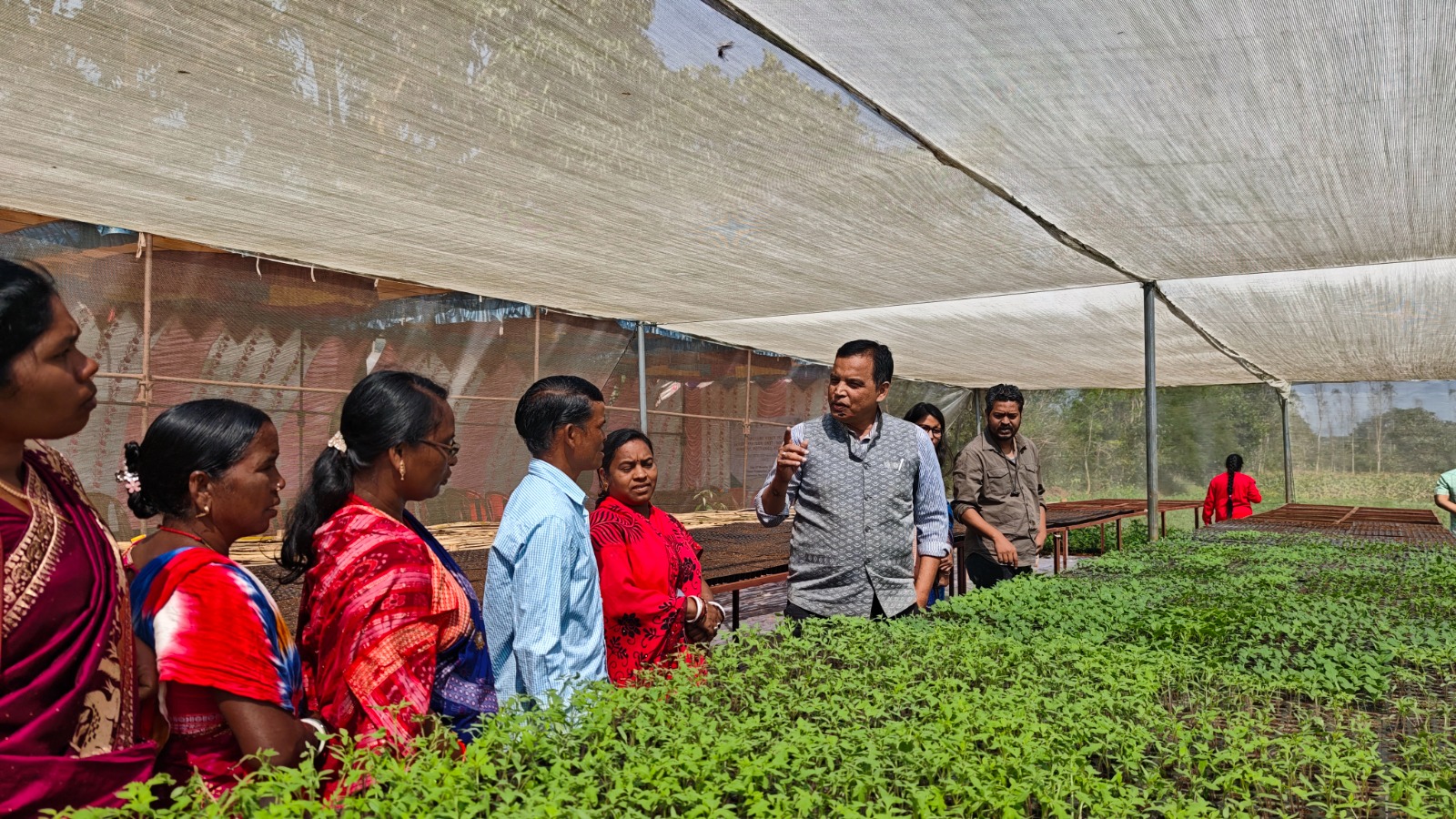
Trinath Masadi (43) is a farmer from Mulashankar village, Pukali Panchayat, in Pottangi block of Koraput district. A graduate (B.A.), he has been engaged in farming as his primary livelihood. Over the years, he developed experience in local cropping systems and natural resource management, and demonstrated openness to adopt improved and sustainable practices.
Trinath is well-versed with government schemes and institutional linkages, and has accessed support under schemes such as RKVY and AEPS of the Government of Odisha. These interventions contributed significantly to his infrastructure development, access to inputs, and technical knowledge.
Based on his technical capacity, access to land, and willingness to demonstrate improved practices, Trinath’s farm was selected as a demonstration unit under Green College Odisha. He received targeted material support to establish a soilless nursery, enabling livelihood diversification and improving local availability of quality seedlings.
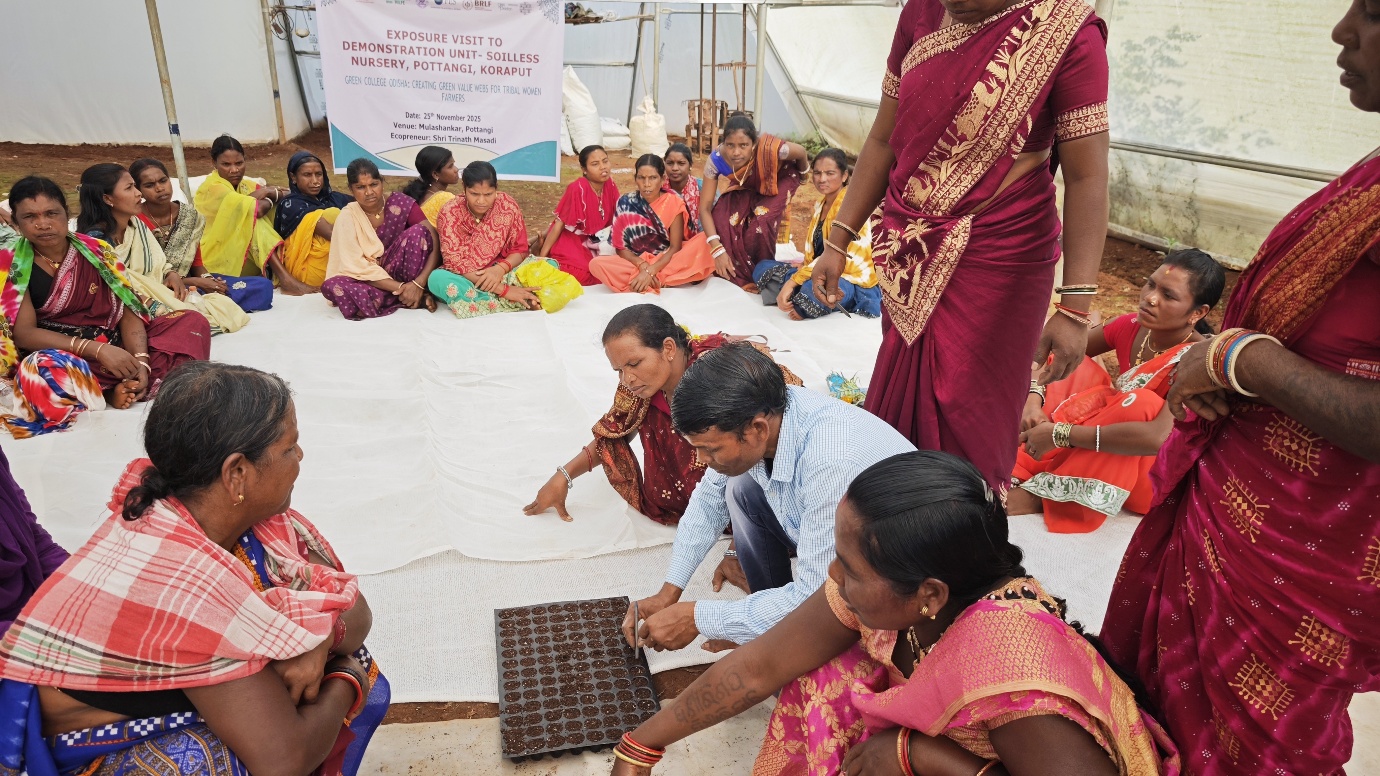
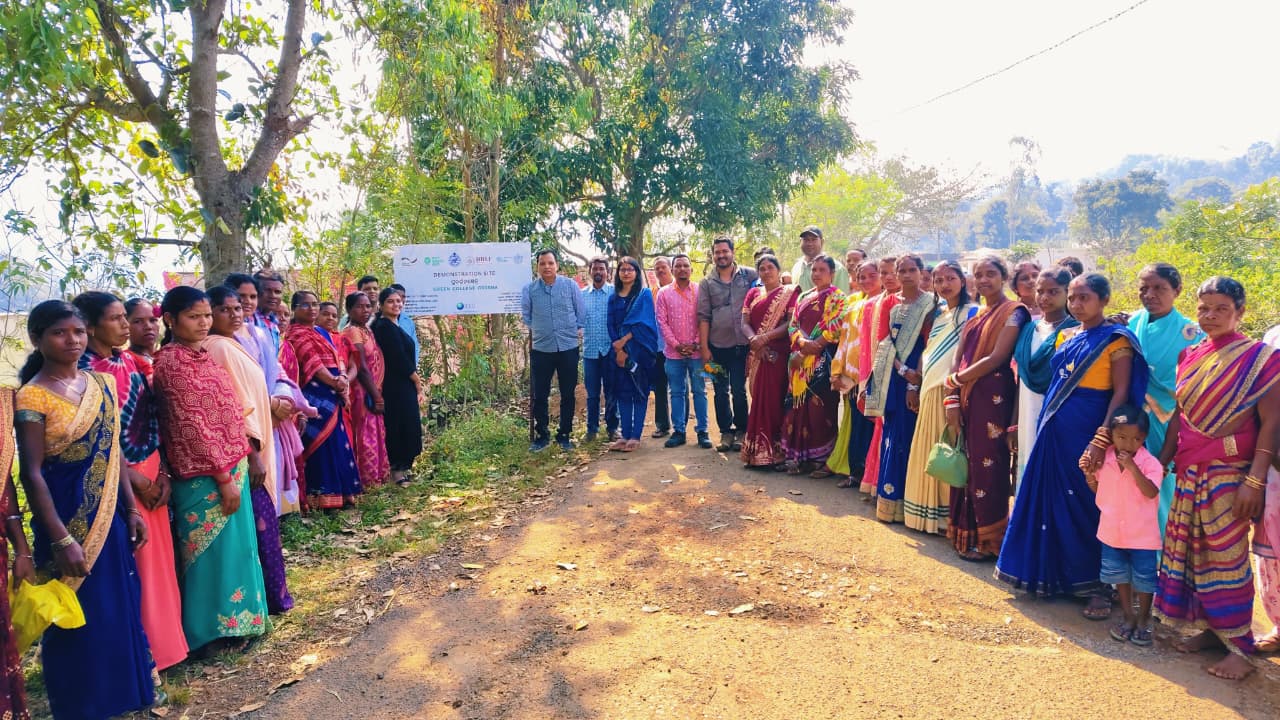
Figure — Shri Masadi during an exposure visit of PG women for adjacent block
📋 Planning-Led, Demand-Driven Nursery Model
A key outcome of the intervention has been the development of a planning-led, demand-driven nursery model. Rather than producing seedlings in anticipation of uncertain markets, Trinath coordinates closely with nearby Producer Groups (PGs).
This process includes:
- Seasonal discussions with PG members on crop plans and varietal preferences
- Estimation of crop- and variety-wise seedling requirements
- Consolidation of demand into a structured indent prior to nursery production
This approach ensures timely availability of quality planting material, reduces production risk, and minimizes wastage. It has also reduced farmers’ dependence on external seedling suppliers and improved access at the village level.
🏗️ Nursery Facilities
Trinath currently operates two nursery structures:
These facilities enable controlled, year-round seedling production aligned with local cropping calendars.
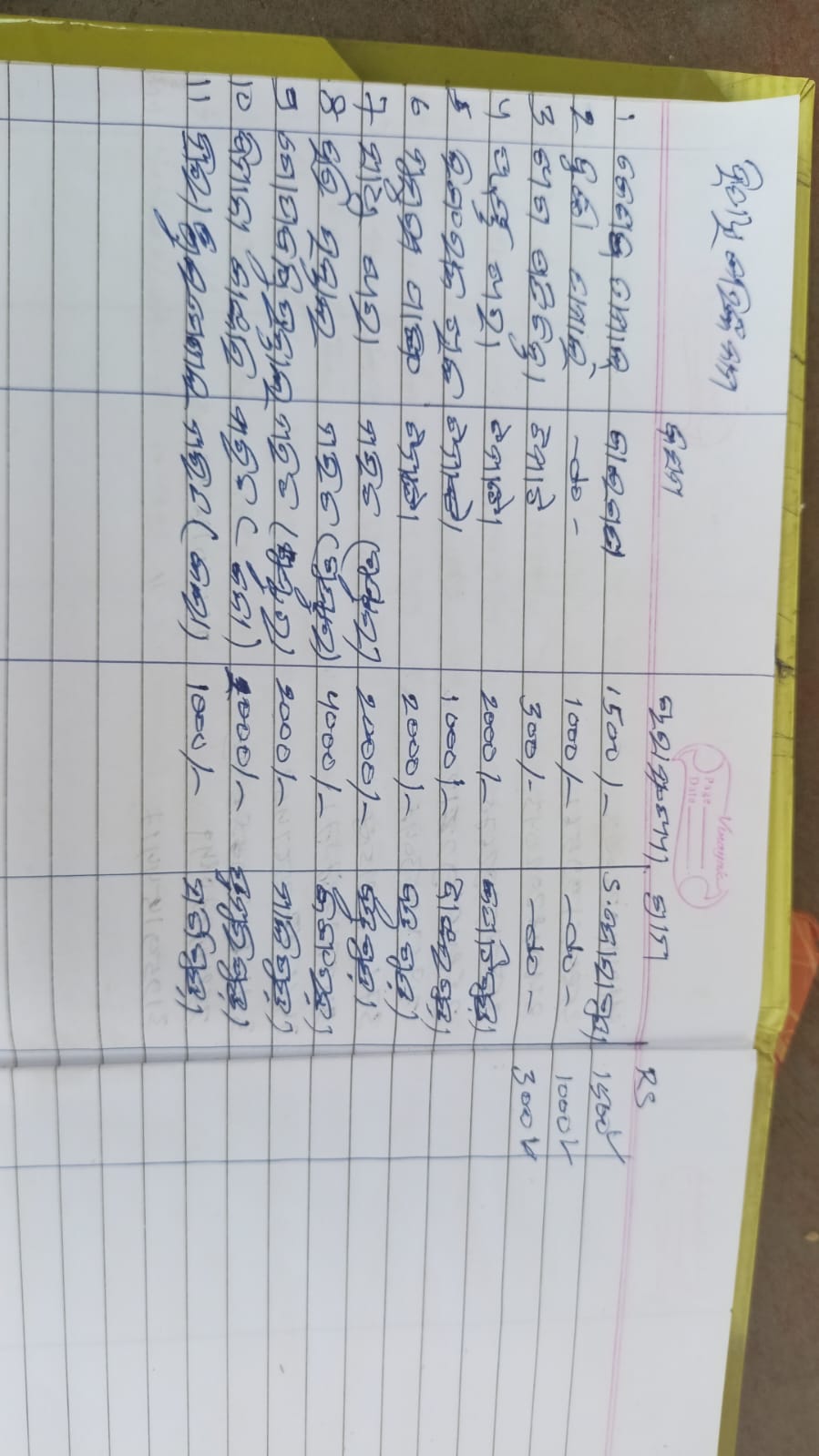
📊 Sales & Indent Data — Since Establishment
Figure — Sales and Indent Sheet till date since establishment of Soilless Nursery (as of 06-02-2026)
| Seedlings | Planning Indent (Nos.) | Basis of Planning | Actual Production | Qty. Sold (till 06-02-2026) | Avg. Selling Price (₹) | Total Sales Value (₹) |
|---|---|---|---|---|---|---|
| Tomato Seedlings | 10,000 | Farmer demand survey, last season sales and Advance booking by PG Members | 8,600 | 7,000 | ₹1.50 | ₹10,500 |
| Chilli Seedlings | 12,000 | -do- | 9,800 | 6,600 | ₹1.00 | ₹6,600 |
| Brinjal Seedlings | 5,000 | -do- | 3,700 | 2,000 | ₹1.50 | ₹3,000 |
| Total | 27,000 | — | 22,100 | 15,600 | — | ₹20,100 |
During the current season, approximately 4,500 saplings were sold to PG members and nearby farmers. Based on confirmed indents, Trinath plans to produce and sell an additional 12,000 saplings in the upcoming cropping season. Seedlings include chilli, tomato, brinjal, and cauliflower, supplied at affordable rates. Nursery production is integrated with his own farming, allowing continuous learning and quality improvement.
🗓️ Forward Planning and Diversification
Trinath plans nursery operations one to two seasons in advance, considering Kharif and Rabi cycles, agro-climatic conditions, and seasonal demand. Planned diversification includes:
- Expanded production of cauliflower and cabbage from November onwards
- Introduction of marigold seedlings to meet puja-season demand
- Exploration of dragon fruit cultivation, with planned adoption of drip irrigation
This forward planning has improved enterprise stability and income predictability.
🎓 Demonstration and Capacity Building
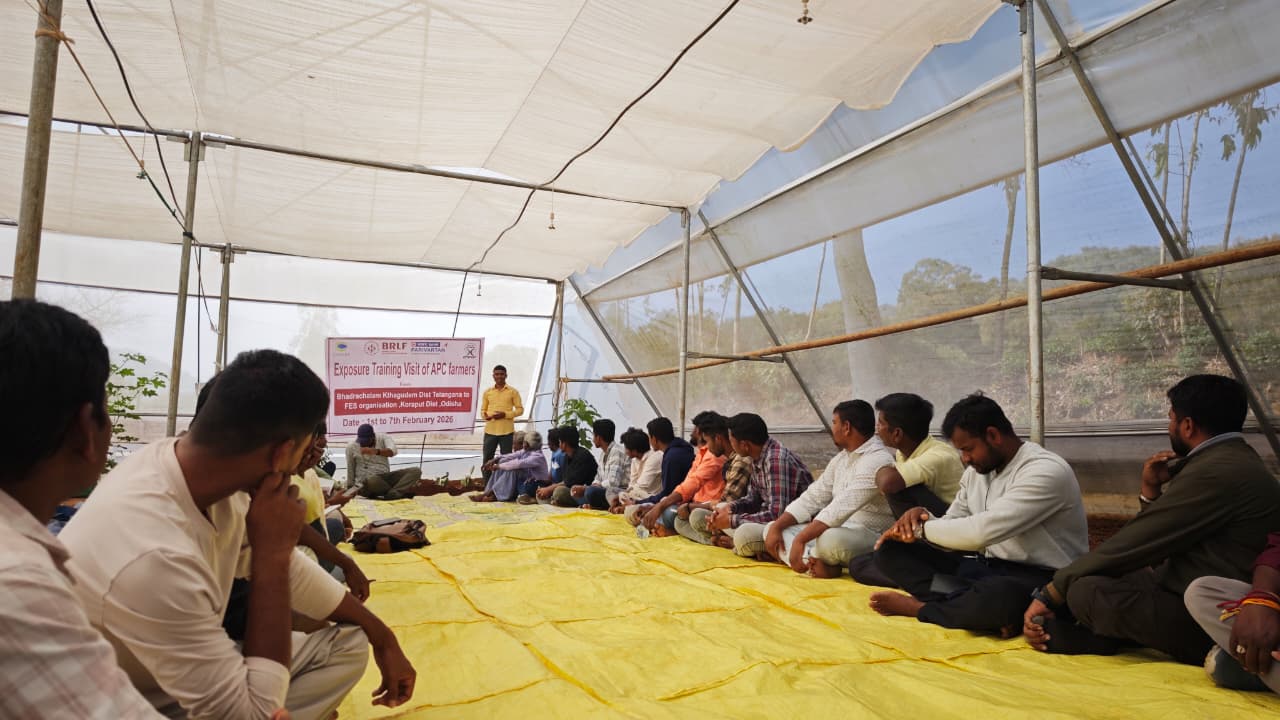
Due to consistent performance and systematic planning, Trinath’s nursery has been strengthened as a demonstration and exposure site under Green College Odisha. Farmers and PG members visit the site to observe:
- Soilless nursery practices
- Indent-based production planning
- Record-keeping and crop-wise scheduling
The site contributes to peer learning and replication of improved practices within the cluster.
🏆 Recognition
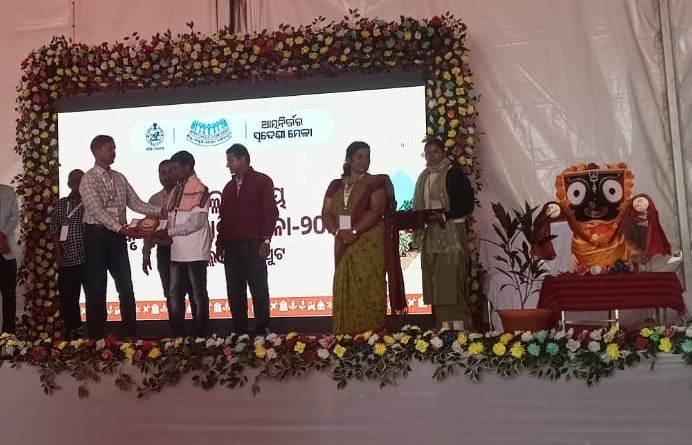
Figure — Exposure Visit from Adjacent block

Recognised at District’s Largest Festival — Parab (December 2025)
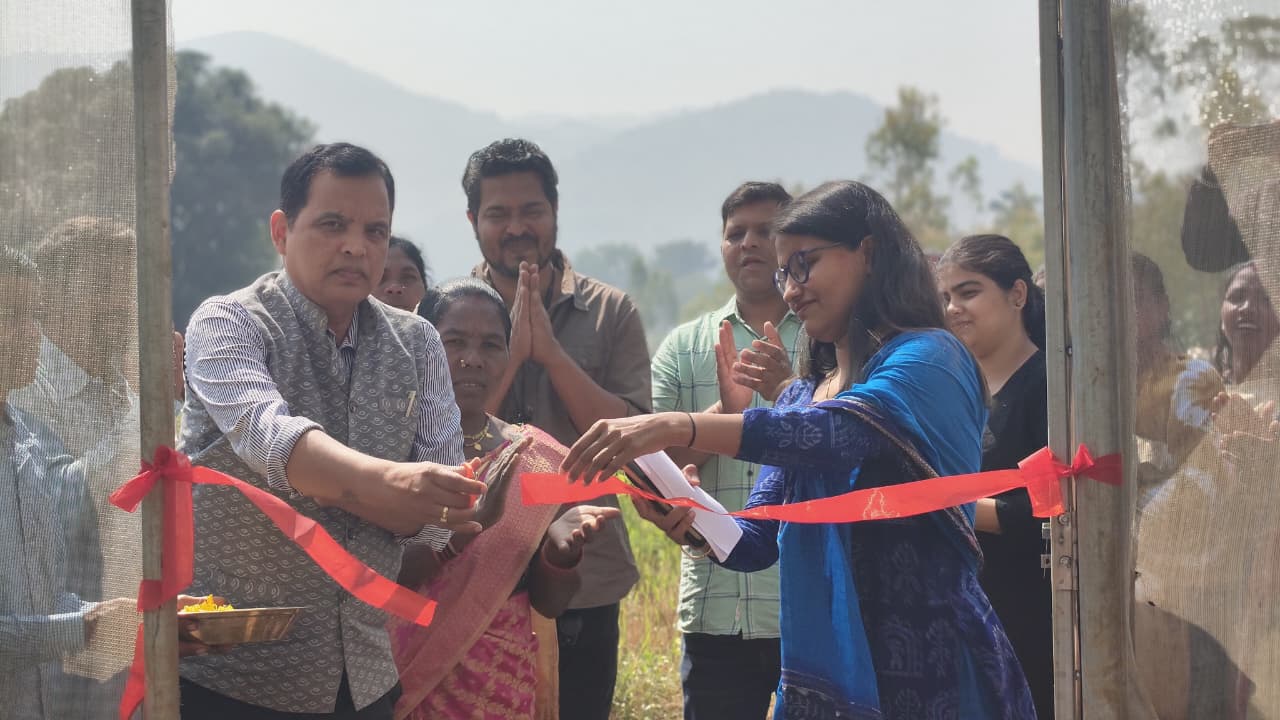
In December 2025, Trinath Masadi received his first formal recognition on the occasion of the District’s largest festival — Parab. He was recommended by the Director of Horticulture (DDH) upon witnessing his enthusiasm during the inauguration of the demonstration unit.
🚀 Way Forward and Sustainability Measures
The nursery unit is projected to generate an annual gross revenue of ₹90,000–₹1,10,000 from sapling sales. To ensure sustainability, 10–15 percent of the net profit will be set aside as a Sustainability Fund and reinvested in recurring input costs, gradually reducing dependency on external inputs and improving net margins. The host farmer is responsible for regular maintenance and operations of the site. Market assurance has been strengthened through advance planning meetings with nearby Producer Group (PG) members, where sapling requirements are jointly estimated and advance orders are collected with a nominal token amount. This mechanism ensures assured sales, early working capital availability, and predictable production cycles. The unit is expected to become self-reliant within 2–3 production cycles, with additional income from exposure visits and paid trainings further supporting maintenance and long-term viability.
“The experience of Trinath Masadi demonstrates the value of planning-led interventions under Green College Odisha in strengthening local agricultural systems and supporting resilient rural livelihoods.”
Contributed by Lijalin Moharana