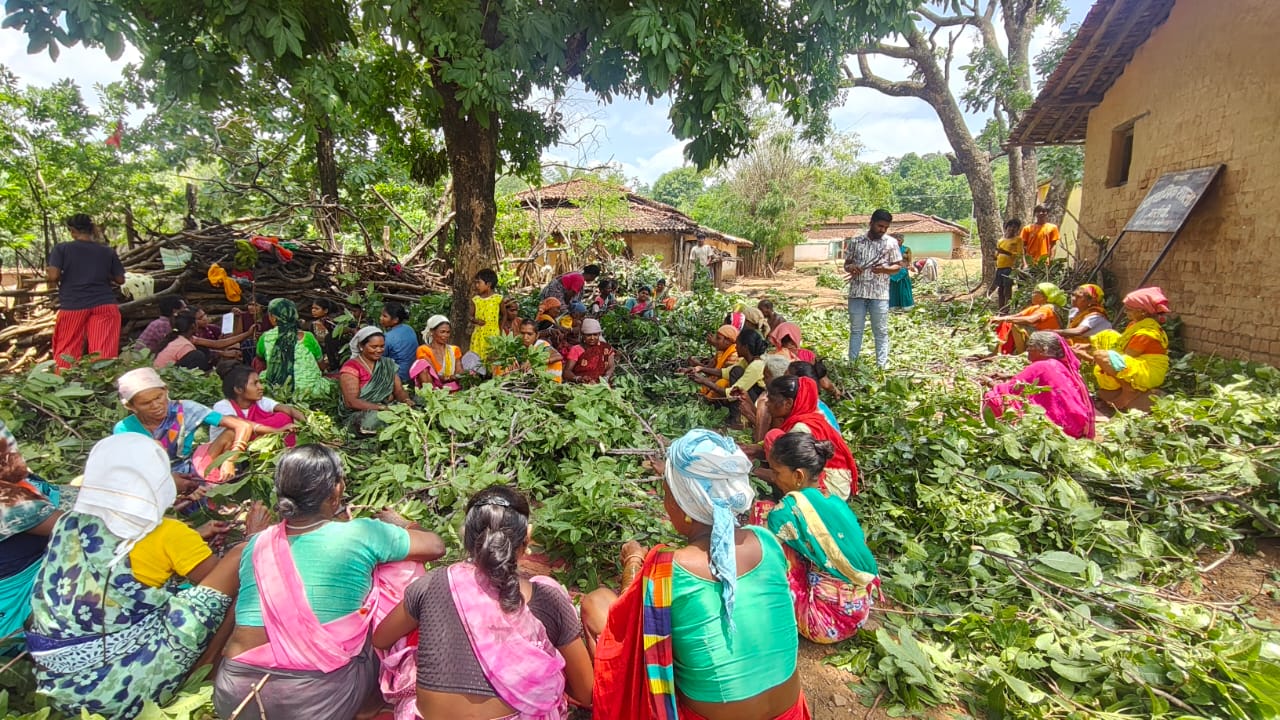
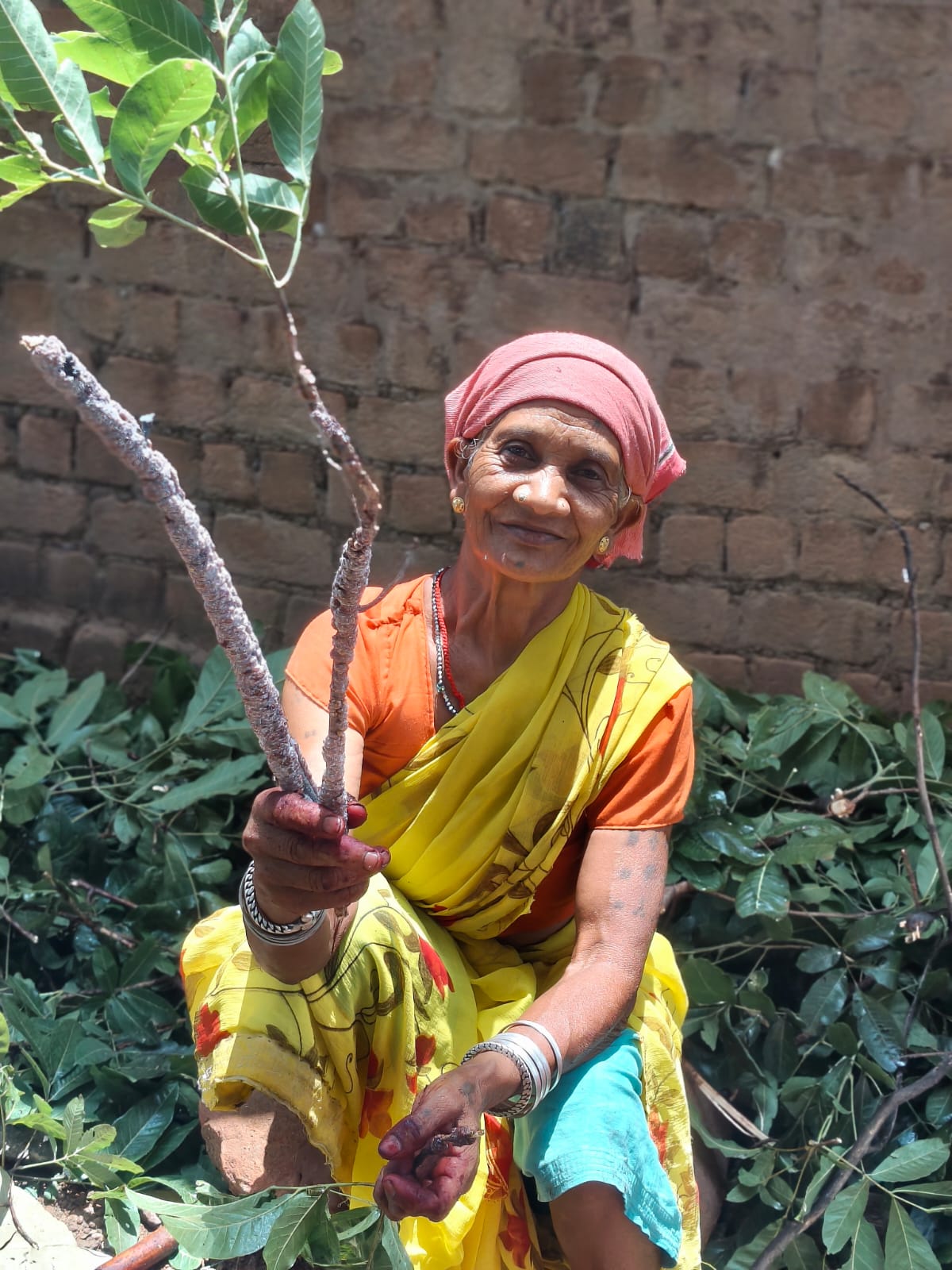
Almost half of the state of Chhattisgarh is covered by forests, making it one of the most forest-rich regions in India. These forests have been lifelines for tribal and forest-dependent communities for centuries. The role of women in the forest economy has been central, their contribution in collecting forest produce, drying, storing, and processing adds value to sustainable household livelihoods. However, the growing impacts of climate change are affecting forest ecosystems and the availability of forest produce. This directly impacts rural households, especially women who depend on forests for food security and income.
The role of women in sustaining forest-based livelihoods is critical as there is a constant fluctuation in forest yields. Hence, women are often placed at the frontline of climate vulnerability.
The urgent need to intervene not just in isolation but more responsively becomes the challenge. The call for action is to form a collective reflection and shared learning supported by coordinated action among organisations that intend to work for forest communities. For many years, there has been a lack of coherence amongst organisations to bring active change within communities, primarily due to scattered approaches.
However, in recent times, this challenge has been recognised and for the first time in many years around 28 civil society organisations working for the welfare and development of indigenous communities have come together on a single platform to collectively explore solutions and pathways to strengthen forest-based livelihoods. This initiative has been jointly facilitated by BRLF, FES, PRADAN, and TRIF.
The unique coalition also highlights the exemplary role of women not only at the grassroots level but also at the leadership level. Women professionals are leading the cohort with a strong commitment to inclusive and sustainable development. This initiative has been designed as a year-long ToTs cohort, envisioned not merely as a training program but as a learning journey.
Its goal is to nurture a cadre of resource persons equipped with strong conceptual clarity and practical field experience to support communities in building resilient forest-based livelihoods. Throughout the year, participants engage with a wide spectrum of themes that shape forest economies.
As Akash from Chaupal organization reflects, “this process has broadened their perspective on forest livelihoods and strengthened their engagement with vulnerable communities such as the Pahadi Korwa”.
At the ground level, participants are engaging communities on responsible forest use and sustainable harvesting, raising awareness against forest fires, encouraging local seed conservation, and promoting plantation for ecological restoration. Additionally, organizations are strengthening convergence with the Forest and Tribal Welfare Departments and mobilizing Producer Groups to collectively market forest produce and improve livelihood opportunities.
What began as a learning platform is gradually evolving into a powerful network of practitioners and community leaders. At its core lies a powerful dimension of women’s empowerment – women professionals leading the initiative while simultaneously strengthening the capacities and opportunities of the women who sustain forest economies on the ground. The initiative is not only improving forest livelihoods but also positioning women as key agents of ecological stewardship and rural transformation.