Beyond One Seasonal Crop to Sustainable Livelihoods
Sirkatta, a small tribal-dominated village under Bhandarwadi Gram Panchayat in Magarlod block of Dhamtari district, Chhattisgarh, is located approximately 35 kilometres from the block headquarters. With 393 residents across 83 households—85% belonging to Scheduled Tribes—the community has long relied on agriculture and forest produce for survival. Yet, with limited irrigation, traditional farming practices, and low exposure to modern techniques, most farmers could cultivate only a single crop each year. This meant low income, seasonal uncertainty, and an unending cycle of economic vulnerability.
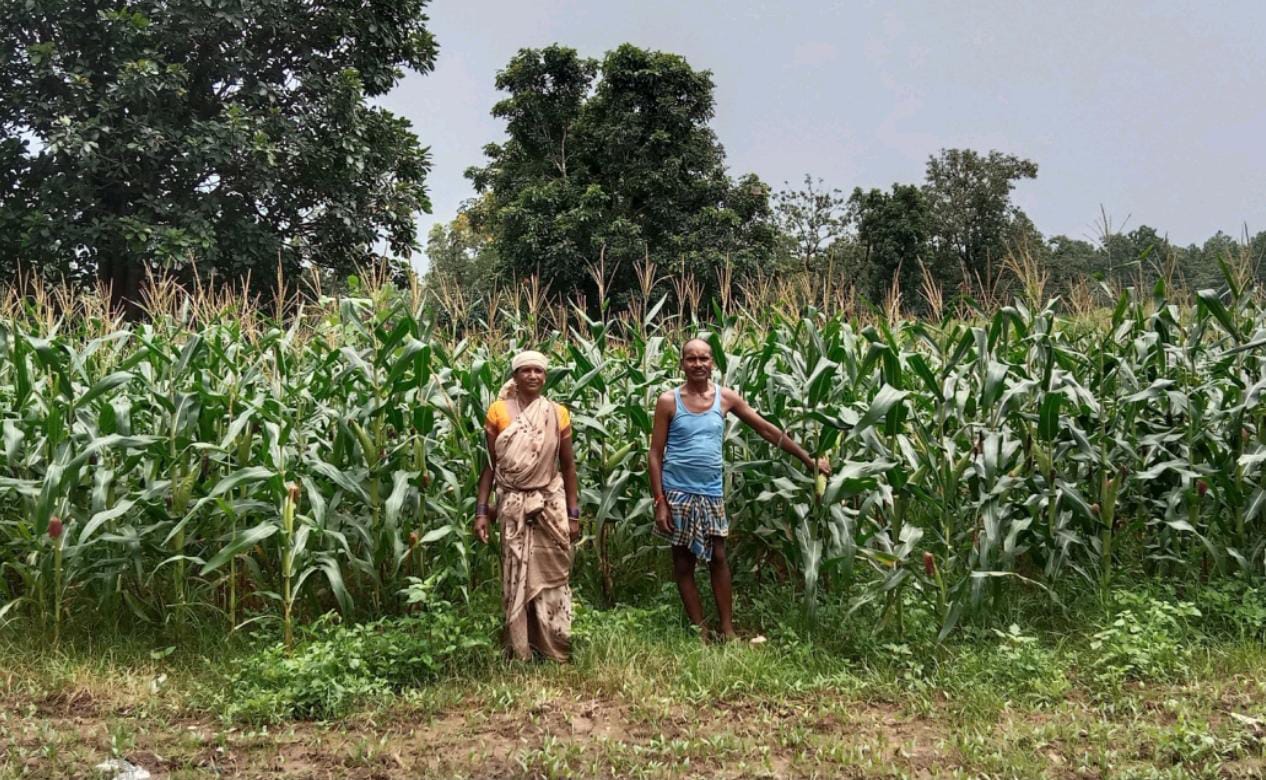
Among them was Rajendra Dhruv, a small farmer owning just 3 acres of land. Rajendra lived with his wife, Dashobai, and their three children, carrying the full weight of managing both home and livelihood. Rising prices and unpredictable income made each day an uphill climb. For a brief period, Rajendra experimented with tailoring to supplement his earnings, but the work proved irregular and insufficient. Eventually, he returned to farming—his only secure option—yet even here, limited knowledge and lack of guidance kept him trapped in low yields and low income.
The turning point arrived when Rajendra came in contact with Agrocrats Society for Rural Development, Magarlod, the organisation implementing a sustainable livelihoods project in Sirkatta. Through village meetings held to develop a Detailed Project Report (DPR), key challenges such as water scarcity, soil degradation, and low productivity came to light. Rajendra actively participated, openly sharing his family’s struggles. Recognising his sincerity and willingness to learn, the organisation selected his household for targeted livelihood and water conservation support.
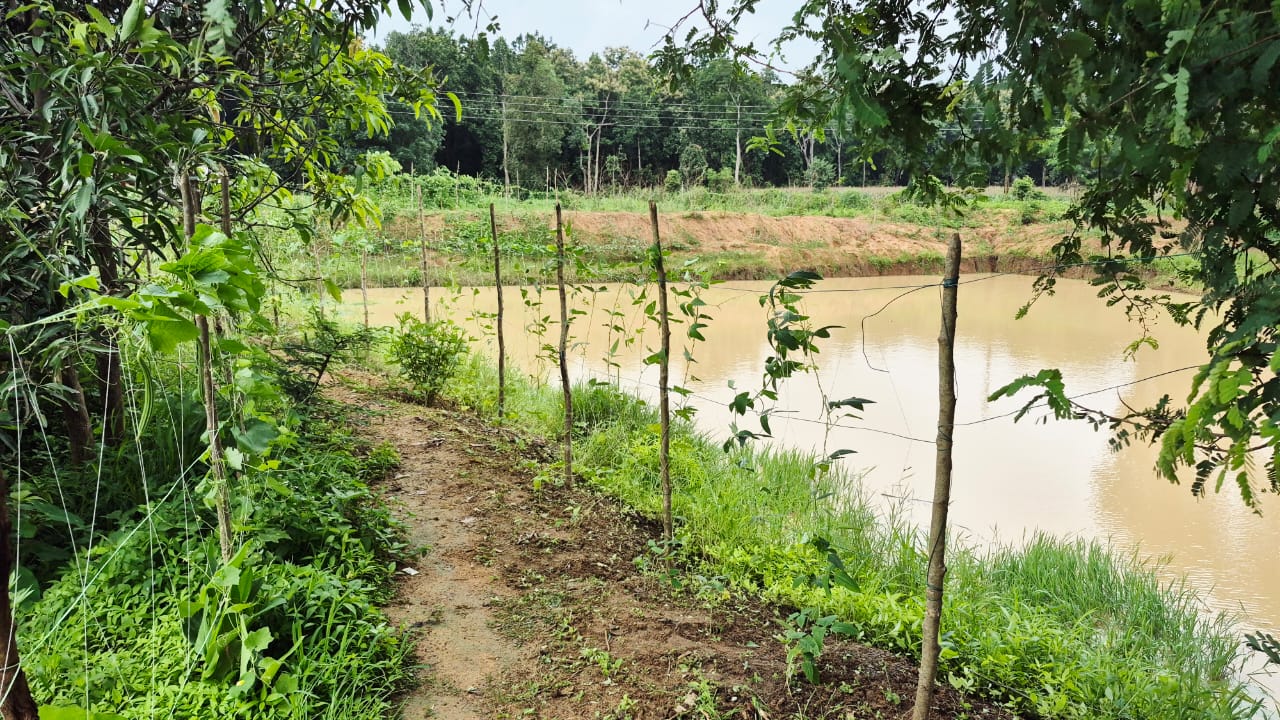
Following a detailed baseline survey, a customised water and livelihood development plan was designed for Rajendra’s farm. This included the construction of a farm pond, installation of drip irrigation on one acre, and extensive capacity-building sessions. Rajendra and his wife underwent training in modern agricultural techniques, crop diversification, soil management, and organic practices. They were also introduced to integrated farming systems that combine crop cultivation with poultry, fisheries, and vegetable production.
The journey was not without challenges. Encouraging farmers to adopt new practices, bridging technical knowledge gaps, ensuring regular monitoring, and coordinating with government departments required consistent effort from both Rajendra and the project team. Yet, step by step, the barriers began to fall.
Today, Rajendra stands as a symbol of resilience and possibility in Sirkatta. From relying on a single seasonal crop, he has moved to a stable, diversified income from crop cultivation, vegetables, poultry, and fisheries. His story demonstrates how the right support, paired with determination, can transform not just a livelihood—but a life. His progress now inspires fellow villagers to explore modern methods and embrace sustainable growth for a more secure future.
With continuous guidance and on-ground support, Rajendra adopted a diversified farming plan:
- Maize on 0.5 acre
Urd on 0.5 acre
- Medicinal crops on 0.5 acre
- Paddy on 1.5 acres
- Beans and leafy vegetables on 0.10 acre and along the farm pond bund
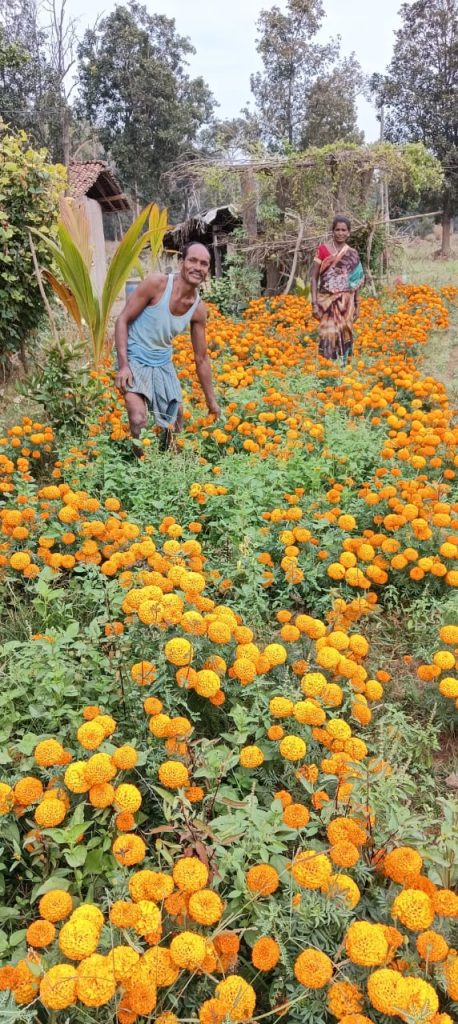
- Marigold on 0.05 acre
- Backyard Poultry
- Fishery in the farm pond
Contributed by: Neha Rose Toppo, Program Executive (Natural Farming & Gender), Chhattisgarh