Research and Knowledge Management

Original research, evaluation studies and data on rural and tribal lives and livelihoods, generated from our own partnerships and field experience.
We work closely with government and non-government stakeholders to study the status of tribal communities, evaluate the impact of government and our own programmes, and build a knowledge hub that CSOs, academics and government can draw on.

Features of our Research and Knowledge Management work

01

Original research

On the current status of tribal communities across key human-development indicators.
02

Original research

Independent evaluations of government schemes and BRLF–CSO–government partnerships.
03

Public data resource

Statistics and documentation on rural banking, demography, health, housing, income, land, agriculture, infrastructure, education, and arts and crafts.
04

Published outputs

Working papers, baseline studies, impact evaluation studies, research reports, learning and policy briefs, case studies, knowledge products, and peer-reviewed book chapters.

Research and knowledge outputs

Policy brief

Investment in Farm Ponds for Public Good: Evidence and Policy Guidelines

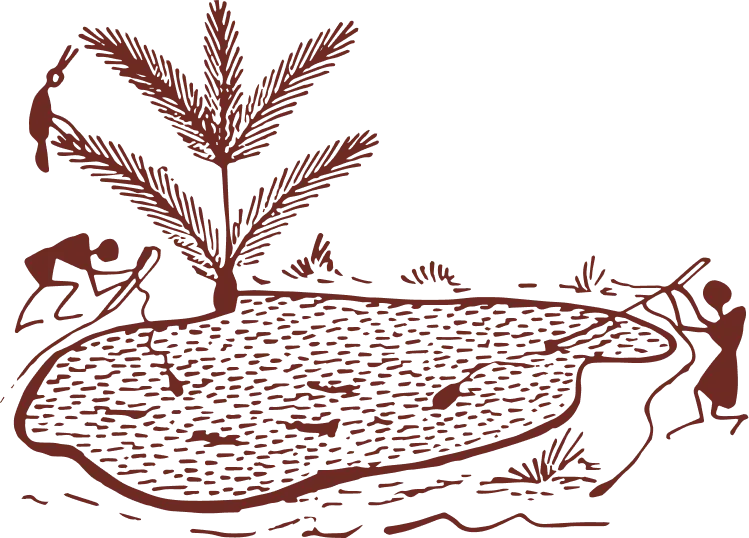
BRLF co-authored a national policy brief on farm ponds, anchored by the School of Public Policy at IIT Delhi with the Revitalising Rainfed Agriculture (RRA) Network and WASSAN. Drawing on a study of 50 farm ponds across 15 states and seven agro-ecologies, it shows that farm ponds can either strengthen resilience or deepen groundwater stress, depending on how they are designed and filled. The brief sets out a clear typology and guiding principles for governments, CSR and philanthropies investing in farm ponds.
50
Farm ponds studied
15
States
7
Agro-ecologies
Research article

Assessing Community Needs, Stakeholder Collaboration and the Influence of Modernisation

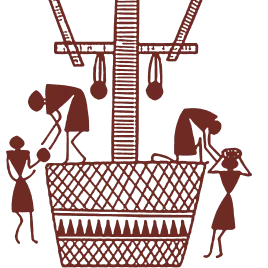
What happens to a weaver’s income when a Jacquard loom and a warping drum replace days of weather-dependent, labour-heavy preparation? This BRLF study from Udalguri, Assam follows 50 households under the DWIMU project, comparing women weavers who use modern tools with those who weave the traditional way. The answer: more output, less drudgery and far higher earnings, along with a clear warning that without stronger markets, branding and storytelling, the gains could stall.
37
Jacquard machines distributed
85%
saved over 70% of weaving time
2.12x
Average annual revenue per weaver rose
Research report

Baseline Study: Improving the Lives and Livelihoods of Marginal Farmers in Jharkhand and Telangana

Before the first intervention begins, what does life look like for a marginal farmer in tribal Jharkhand and Telangana? This baseline study for BRLF’s initiative with state governments and HDFC paints that picture across four districts (Sahibganj, Godda, Pakur and Bhadradri Kothagudem), with control villages set aside to measure change later. It reveals rain-fed farms, incomes clustered at the low end and seasonal migration as a way of life, and maps where irrigation, climate-resilient farming, markets and community institutions can make the difference.
817
intervention and 219 control households
54
villages, 4 districts, 2 states
₹75,000
median annual household income

Explore our published research

Browse working papers, evaluation studies and reports from across our programmes.

See all research publications

Books, evaluation studies, baselines, case studies, book chapters and ongoing research — all in one place.